
River Campus Earl and Margie Holland College of Arts and Media Southeast Missouri State University
READ:
The use of unauthorized photographic and recording devices during the program is strictly prohibited.
Please silence any and all notifications on this device.
Kindly turn off any other electronic devices during the program. Thank you.
There will be a 5 minute intermission to flip the stage for the second half. Facilities are located down the hall to your left.
Now, on with the show…

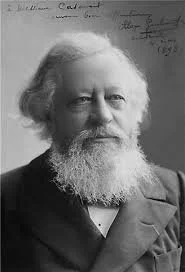
Morceau Symphonique stands as one of the most recognizable standard works for solo trombone and piano, written in 1902 as an examination piece for students at the prestigious Paris Conservatoire. Alexandre Guilmant (1837-1911) was a French organist and composer who served as the organist at the Holy Trinity Cathedral and Professor of Organ at the Conservatoire. Most of his compositions center around the organ, but he did write for other instruments—most notably, in Morceau Symphonique.
It features expressive Andante sostenuto and driving Allegro moderato sections, each calling back to the other as the piece progresses. Melodic and harmonic elements are rooted in the late Romantic compositional style, so it flows smoothly to the modern ear. This beloved piece remains a staple of the solo trombone repertoire, and it has been arranged for solo trombone and piano, organ, wind band, and orchestra.
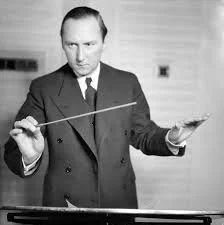
Concertino for Trombone and String Orchestra is one of twelve concertini written between 1953 and 1957 for various instruments by Swedish composer Lars-Erik Larsson (1908-1986). Larsson’s eclectic compositional style combines the late Romantic with neo-classical influences. He wrote for the theatre, cinema, and broadcasting in addition to the more traditional forms of symphony, concerto, chamber, and vocal music.
Larsson composed his Concertino for Trombone in 1955, and he uses the tried-and-true three-movement concerto design. Preludium: Allegro pomposo is a dramatic quasi-candenza featuring the solo trombone’s virtuosic range with minimal interjections from the accompaniment (written for string orchestra). The second movement, Aria: Andante sostenuto, showcases the vocal quality of the trombone. Finale: Allegro giocoso is a brisk, playful restatement of the thematic elements introduced earlier in the work. The work is characterized by half-step intervals which build and release tension as they resolve.
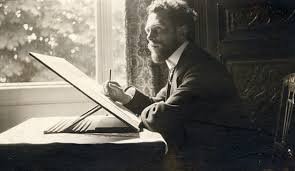
Jongen was a Belgian organist and composer who began composing at the age of thirteen. He won the Belgian Prix de Rome, allowing him to travel to Italy, Germany, and France to further develop his compositional skills. During his lifetime, he served as a composition professor at the Liège Conservatoire and Royal Conservatory of Brussels.
Aria et Polonaise, written by Joseph Jongen (1873-1953) in 1944 in the French recital standard, reflects many aspects of impressionism. It starts with a lyrical aria, written to imitate the voice. It concludes with a contrasting, spirited polonaise, a traditional Polish dance style in 3/4 time. This dynamic contrast allows for full expression of the musical, rhythmic, harmonic, and range capabilities of the trombone, challenging the trombonist and pianist alike. While not entirely through-composed in nature, its repeated melodic elements are brief compared to the wide array of original material.
* * * INTERMISSION * * *
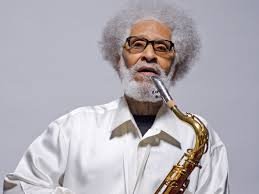
Tenor Madness is a blues standard written by tenor saxophonist Sonny Rollins (b. 1930) as the title track to his album of the same name in 1956. Rollins stands as one of the most prolific jazz saxophonists in history, contributing a large number of compositions including St. Thomas, Oleo, Doxy, and many more. His recording of Tenor Madness is the only known recording featuring both Rollins and the equally legendary John Coltrane. Today, it is a common blues head called on the band stand across the world, and its simple melody is a great introduction to the blues for beginning jazz musicians.
Traditionally, the piece is performed up-tempo, but today’s performance will feature a more relaxed feel. In contrast to the rest of the set, this piece is being performed by solo trombone alone, as if on a street corner. Listen for walking bass lines, raucous glissandi, and melodic interjections as you are enamored by the soul of the blues.
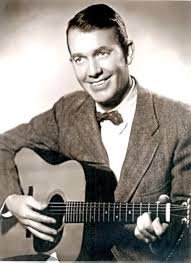
The Bare Necessities was written by Terry Gilkyson (1916-1999) for Disney’s 1967 animated feature film, The Jungle Book. In 1968, Gilkyson was nominated for an Academy Award for The Bare Necessities. In the film, Baloo (Phil Harris) performs the song to Mowgli (Bruce Reitherman) to explain life as a bear. During which, their relationship grows and sets up the heart of the movie.
Today’s performance features trombone and piano (Keaton Lacey) in a collaborative, spontaneous fashion. Each soloist will take turns improvising and accompanying each other. For your enjoyment, the original lyrics have been included below. Forget about your worries and sing along!

Look for the bare necessities The simple bare necessities Forget about your worries and your strife I mean the bare necessities Old Mother Nature’s recipes That brings the bare necessities of life
Wherever I wander, wherever I roam I couldn’t be fonder of my big home The bees are buzzin’ in the tree To make some honey just for me When you look under the rocks and plants And take a glance at the fancy ants Then maybe try a few
The bare necessities of life will come to you They’ll come to you!
Bye Bye Bones was written in 1999 by Ulrich Nehls for trombone quartet. It is driven by a triplety blues feel in E♭. After a brief introduction, the head bounces between voices over a steady, quarter note bassline. Each trombonist has an opportunity to shine improvisationally before a vigorous shout section and outro.
Gear up for a bluesy performance by the SEMO Jazz Studio trombone section!
A Rose with Thorns was written by Isaac Thorn (b. 2003) as a college sophomore in 2023. The piece is built off of a chromatically descending bassline in D minor and is structured in traditional AABA format. Its 3/4 feel distinguishes it from most jazz tunes.
The lyrics play on the old adage not to “judge a book by its cover,” or in this case: don’t be fooled by the pretty petals of a rose—its stem of thorns will prick you. Today, it is performed by a jazz combo featuring Keaton Lacey (piano), Alex Davidson (bass), Simon Wallace (drumset), and sung by Asa Faust.
Roses may be all quite pretty and red; Red like the blood they will draw
Unlike a daisy which never has said “I don’t love you after all”
So when stuck by a thorn you realize once more that one’s colorful petals aren’t all, for
Roses may be all quite pretty and red, but the thorns on its stem are small